

Work From Within. The philosophy behind everything I create.
The thinking behind Workflow Studio and why I believe meaningful brand identities begin with understanding, not design.
I’ve always believed that a brand should be more than something that looks good. A beautifully designed logo, considered typography and a carefully chosen colour palette are all important, but I think there's something that needs to happen before any of those decisions are made. You need to understand the business behind the brand.
When I started developing the identity for Workflow Studio, I wanted to establish a philosophy that reflected how I approach design. Something that would influence the work I create, rather than simply become another line of text on my website. That thinking eventually became Work From Within. The idea is straightforward. Every brand should begin with its foundations. The people behind it, the story of how it started, the customers it wants to reach, the message it wants to communicate and the ambitions driving it forward. Everything else should develop from that understanding.
I think this is an important distinction because businesses can often become too focused on how they want to look before understanding what they want to say. There's nothing wrong with wanting a modern, minimal or professional identity. Those are all qualities that can contribute to great design. But when appearance becomes the starting point, it's easy to overlook the things that make a business genuinely interesting. For me, that is where brand strategy becomes valuable. It provides something meaningful for the creative work to respond to. Rather than designing an identity and finding a story to support it afterwards, I want the story to influence the identity from the beginning. It's a way of working that gives every project a clearer direction, but just as importantly, it makes the entire creative process more interesting.
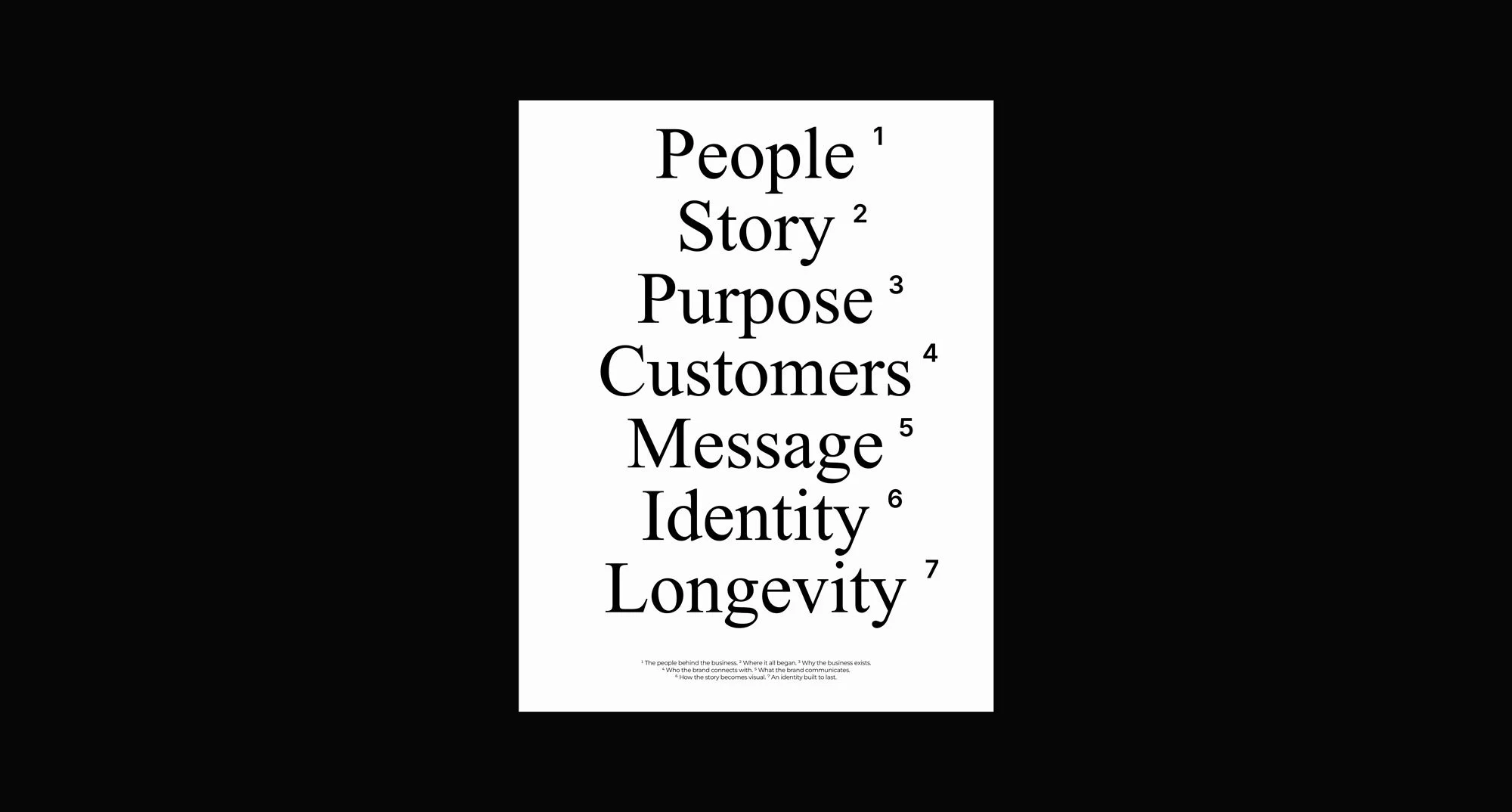
Finding What Makes a Business Different
Every business has a story worth understanding. The challenge is finding what makes that story distinctive and translating it into something meaningful.
One of the first things I want to understand when starting a new project is the story behind the business. Why does it exist? How did it begin? What do the people behind it believe in? And perhaps most importantly, what do they want their customers to understand about them?
These might seem like relatively simple questions, but I've found that the answers can reveal much more than an initial design brief. A business owner might know exactly what products or services they offer, but explaining what makes their business different can be more difficult. This is particularly true when competitors are offering something very similar. I don't believe a business needs a completely unique product or service to have a distinctive brand. Two businesses could offer exactly the same thing but have entirely different stories, personalities and ambitions. One might be driven by years of family tradition, while another could be built around a completely different approach to its industry.
The difference doesn't always have to be dramatic. Sometimes it's found in the smallest details, such as how someone approaches their work, how they treat their customers or what motivated them to start the business in the first place. My job is to find those details and understand which ones are worth building upon. This is also why I think businesses sometimes place too much importance on what their competitors are doing. It's natural to look at other brands within your industry, particularly when trying to establish how you want to be perceived. But when every business starts looking towards the same references, the results can become very similar.
An identity might look beautiful and professional, yet communicate very little about the business it represents. I would much rather create something that feels genuinely connected to the people behind it. Something that reflects their personality, values and ambitions, rather than simply following a particular visual trend.
This is how I approach brand strategy at Workflow Studio. The research and conversations at the beginning of a project aren't separate from the creative process. They're what allow me to develop a direction that feels appropriate for the business. Once that foundation is understood, the challenge becomes finding an interesting way to communicate it visually.
Designing something that looks good is one thing. Designing something that means something is another.
Turning Meaning Into a Visual Identity
Once I have a clear understanding of a business, I begin exploring how those ideas can become visual. This is probably the part of the process I enjoy most, because there are so many different ways to communicate the same message. A shape, a particular style of typography, a photographic treatment or even the relationship between different graphic elements can all contribute to how a brand tells its story.
A good example of this is OFFDays, a lifestyle brand I developed around the idea of "For the days you feel off." What interested me about OFFDays was the emotional side of the brand. Rather than creating another lifestyle identity built around a particular aesthetic, I wanted to explore how a feeling could influence its visual direction. I began thinking about the way we remember happiness. Some of our happiest memories aren't necessarily the clearest. As time passes, those moments can become blurred, distant and slightly distorted, even though the feelings associated with them remain. That idea became the foundation for the brand's imagery.
I introduced deliberately blurred photography to represent those fading memories. The imagery created a particular atmosphere, something emotional and reflective rather than overly polished or commercial. Alongside this, I developed a minimal, typography-led identity with a modular system of geometric symbols. What I like about this example is that the blurred photography wasn't chosen simply because it looked interesting. There was a reason for it, something that connected directly to the meaning behind the brand.
That's not to say every individual element of a brand identity needs to tell a complicated story. I don't think it does. Sometimes a design decision is simply about balance, functionality or making something visually stronger. But I do believe enough of those decisions should connect to the central idea for the identity as a whole to communicate something meaningful. Having that foundation doesn't restrict creativity either. If anything, I think it encourages more exploration.
When developing a new identity, I might explore anywhere between 50 and 100 initial logo ideas before narrowing them down to three stronger concepts. I try not to limit the directions too early. Some ideas might communicate the story beautifully but need visual development. Others might look fantastic but have very little connection to what the business represents. I usually find it helpful to step away from the work and return with fresh eyes. It becomes easier to recognise which concepts genuinely answer the brief and which ones I've become attached to simply because I like how they look. I've explored this side of the process further in The Decisions That Never Make the Presentation.
The strongest ideas are the ones that balance the story, the appearance and the practical requirements of the identity. They're also the ideas that have the potential to develop into something much bigger than a single logo. And I think that's where the long-term value of this approach becomes clear. Design trends will always change. What feels contemporary today might look very different in five or ten years. But the foundations of a business, its values, purpose, personality and ambitions, often remain much more consistent. When an identity is built around something meaningful, there is a reason behind the decisions that shape it. That creates confidence for the business owner because they understand why their brand looks and feels a certain way.
It also creates consistency as the business grows. A brand might begin with a logo and website, but eventually need packaging, signage, social media assets or applications that weren't considered during the original project. When there's a strong underlying concept, those new decisions become easier because everything can develop from the same foundation. That doesn't mean a brand should never change. Businesses evolve, and their identities should have the flexibility to evolve with them. But I think there's a difference between developing an identity and constantly redesigning it to follow the next trend.
When I developed Workflow Studio's own identity, I wanted Work From Within to be more than a philosophy written on a page. It needed to influence the visual system itself, from the logo and supporting marks to the typography, imagery and overall creative direction. It's the same thinking I try to bring into every project.
Ultimately, I don't believe a strong brand needs to be complicated, but I do believe it needs to be understood. The most interesting part of developing a brand identity isn't always creating something new. Sometimes it's discovering something that was already there and finding a better way to communicate it.
