

More Than a Logo. Everything a Business Needs to Be Recognised.
The Difference Between Having a Logo and Building a Brand
A brand identity package should provide a business with everything it needs to establish a recognisable and consistent visual presence. From logos and typography to colour palettes, brand guidelines and practical applications, each element contributes to how a business presents itself across different environments.
However, not all branding packages offer the same level of detail. Some provide a standalone logo and a handful of supporting files, while others establish a complete visual identity designed to work across digital platforms, printed materials and future applications.
Understanding the difference is important. A logo might be the most recognisable element of a business, but it represents only one part of the wider identity. Without a considered approach to typography, colour, layout and usage, even a well-designed logo can become disconnected from the materials surrounding it.
At Workflow Studio, our approach to brand identity design focuses on developing a complete identity around the individual needs of each business. The objective isn't simply to provide more design assets, but to ensure everything has a purpose, works together and remains useful long after the initial project is complete.
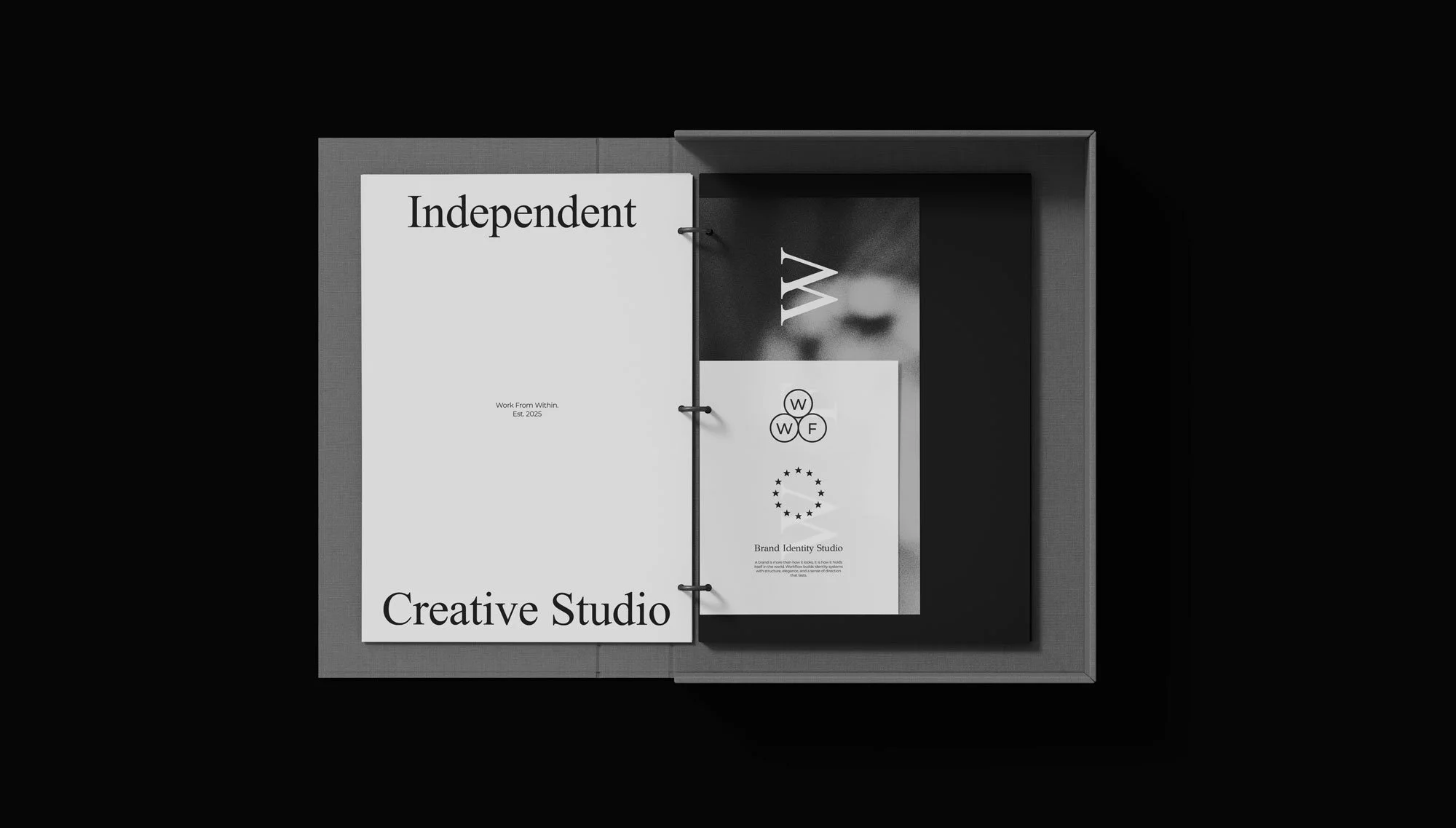
The essential elements that turn an individual logo into a complete visual identity.
What Should a Complete Brand Identity Package Include?
A professional brand identity package brings together several important components, each serving a different purpose. While the exact deliverables depend on the business, certain elements should form the foundation of every identity.
A Complete Logo Suite
A logo should never be restricted to a single arrangement or colour. Different environments require different formats, making flexibility an essential consideration during the design process. A complete logo suite should include a primary logo, secondary variations, horizontal and vertical arrangements where appropriate, and simplified symbols or sub marks for smaller applications. Each variation should be developed in the relevant brand colours and supplied in suitable file formats.
These variations aren't simply alternative designs. They allow the identity to work effectively across different spaces, from a wide website header to a small social media profile image. For businesses requiring a more focused visual solution, professional logo design can provide a starting point. A complete identity develops that foundation further, establishing the visual elements that surround the mark.
Typography, Colour and Supporting Elements
A recognisable brand isn't dependent on its logo appearing everywhere. Typography, colour, imagery, composition and supporting graphic elements all contribute to how a business is identified. When these elements are developed together, they establish a visual language that remains recognisable even when the logo is absent. A complete identity should establish primary and secondary typefaces, a defined colour palette, and appropriate supporting elements such as patterns, graphic devices or imagery direction.
These decisions need to work collectively rather than independently. During the creative process, it's important to test how a logo performs alongside typography, colour and other assets before the finished identity is presented. An individual element might look appealing on its own, but the real test is whether everything works together.
Brand Guidelines and Usage Rules
One of the most important, and frequently undervalued, components of a branding package is the brand guideline document. Without documented rules, a logo can be stretched or incorrectly positioned, colours can gradually change, and typography can become inconsistent across different applications. Brand guidelines establish how the identity should be used. They typically document logo variations, minimum sizes, clear-space requirements, colour specifications, typography, imagery, layouts and examples of correct and incorrect applications.
At Workflow Studio, comprehensive guidelines often take the form of a 20–30-page PDF, depending on the complexity of the project. This document becomes particularly valuable when other designers, printers, developers or employees begin working with the identity. Rather than interpreting the brand independently, everyone has an established reference to follow.
Digital and Print Applications
A brand identity needs to function beyond its original presentation. Depending on the business, practical applications might include business cards, letterheads, email signatures, social media templates, presentation layouts, signage or other relevant materials. These deliverables should be selected according to how the business operates. A consultancy may benefit from professional presentation templates, while a retail business might place greater importance on packaging and physical signage. The purpose of these applications is to demonstrate how the identity works in practice and provide useful assets for everyday communication.
Understanding what matters before investing in a professional identity.
How to Choose the Right Branding Package for Your Business
The most suitable branding package isn't necessarily the one offering the greatest number of deliverables. It's the one that provides the right foundations and applications for the business using it. Different businesses have different requirements, and those requirements should influence the scope of the project.
Not Every Business Needs the Same Deliverables
A startup establishing its first identity will have different needs from an established company undergoing a rebrand. Some businesses require extensive printed materials and physical applications. Others operate almost entirely online, where websites, social media and digital presentations are more important. Although the core identity should always include a suitable logo suite, typography, colour palette, exported artwork and brand guidelines, additional applications should reflect the specific requirements of the business. A carefully considered package should provide everything necessary without adding materials that are unlikely to be used.
What Makes a Professional Logo Work?
Before choosing a designer, it's worth examining how their previous work performs beyond the presentation mockups. A strong logo should remain recognisable at different sizes. Fine details that appear impressive on a large screen may disappear when reduced to a small profile icon or embroidered onto clothing. It should also work in a single colour, without depending entirely on gradients, shadows or complex effects. This becomes important for applications such as stamps, engraving and certain printing processes.
Flexibility is equally important. A horizontal logo may work perfectly across a website header but become difficult to use within a square social media avatar. A responsive logo suite addresses these challenges through considered variations rather than forcing one arrangement into every application. These are practical considerations that should be explored throughout the design process, not discovered after the project has been completed.
What Files Should You Receive?
The final handover is an important part of any professional identity project. Clients should receive a clearly organised collection of approved logo variations, supplied in suitable formats for digital and printed applications. Editable vector files, such as AI, EPS or SVG, allow artwork to be enlarged without losing quality. Transparent PNG files provide convenient assets for everyday digital use, while PDF files can support professional printing and document-based applications.
The exact formats should reflect the project's requirements, with appropriate colour versions supplied for different uses. Just as important is how these files are organised. Clearly labelled folders separating logo variations, colours and formats make it easier for clients and future collaborators to find the correct assets without repeatedly requesting additional files. The finished handover should also include the agreed brand guidelines and any supporting templates or applications developed during the project. A professional identity should be straightforward to use, even when the original designer is no longer involved.
Understanding the Value of a Complete Identity
The work involved in developing a brand identity extends considerably beyond the files delivered at the end. Before a client sees the first concepts, ideas are explored, tested and refined. Logos are assessed at different scales, typography and colours are introduced, and potential applications are considered to understand how the identity will function as a whole. This development process is essential. A visually appealing logo is only one part of the challenge. The wider objective is to establish an identity that remains distinctive and recognisable across different environments.
For businesses comparing quotations, understanding these differences is often more valuable than comparing the number of deliverables alone. Our article on how much brand identity design costs in Ireland explores how project scope, research and development influence the overall investment. Ultimately, a successful identity shouldn't depend on constant involvement from the designer who created it. It should give the business the assets, guidance and flexibility needed to communicate confidently and consistently as it develops.
