
More options don't always mean better design
The Value of Creative Exploration
When a business invests in a new logo, one of the first questions is often how many concepts will be included. It's an understandable question. If one designer offers three concepts and another offers eight, eight can seem like better value. But I don't believe the quality of a branding project can be measured by the number of options placed in front of a client.
At Workflow Studio, I typically present three distinct concepts at the first stage of a logo or brand identity project. Through experience, I've found that three provides a useful balance: enough variety to explore genuinely different directions, but not so much choice that the presentation becomes overwhelming. The important part is what happens before those three concepts are selected. I begin with what I call the concept playground. It's a space for experimentation, where I might explore 25 to 50 ideas, marks, compositions and possible routes. There are no expectations that every idea will become a finished logo. Some are promising from the beginning. Others are rough, impractical or simply not right for the brief. That doesn't make them a waste of time. An unsuccessful direction can reveal what the identity shouldn't be, or lead to a stronger idea that wouldn't have emerged otherwise.
This stage is deliberately expansive. I want to test different approaches without committing too early to a visual style. The process might involve experimenting with letterforms, geometric relationships, symbols or the way a mark behaves alongside typography. Ideas are compared, challenged and developed until a smaller number begin to stand apart.
Editing is where the designer's judgement becomes particularly important. From the wider exploration, I identify the strongest three alternative routes and spend time developing each of them. A concept should earn its place in the presentation because it answers the brief and has the potential to grow into an identity, not because I need to fill a quota. I've learned this partly by getting it wrong. In the past, I've shown clients the concept playground itself, hoping that seeing everything would help them choose a direction more quickly. Almost every time, it had the opposite effect. Unfinished ideas were compared with more developed ones. Attention shifted towards small visual preferences. Instead of bringing clarity to the process, the extra options introduced uncertainty.
Sometimes, when clients ask for several additional concepts, the direction they eventually choose is one from the original presentation. In my experience, that request can be a sign that they need more confidence in the thinking behind the work, rather than more designs.
There is a difference between giving someone choices and helping them make a good decision. Exploring possibilities is my responsibility as a designer. Selecting and presenting the strongest of them is part of the value I provide.
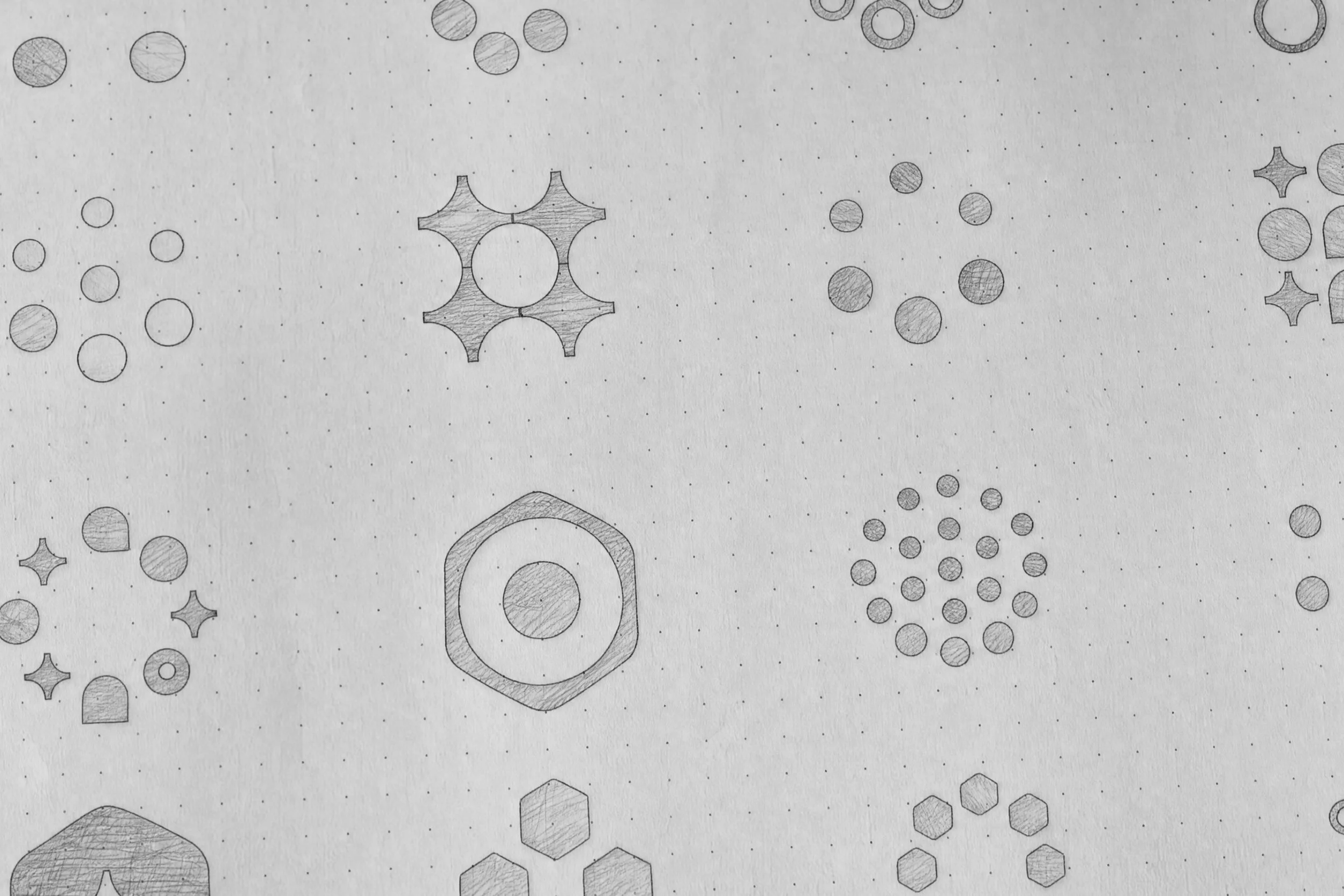
The strongest identities come from exploring every possibility, refining the best ideas and knowing which direction is worth pursuing.
Three Directions, Not Three Logos
The next stage is where those selected ideas become much more than sketches. I wouldn't present three standalone logos on a blank page and expect a client to imagine the rest. Instead, I build three developed creative directions, each showing how the concept could work as a wider brand identity.
That means looking at the relationship between the mark, typography, colour, layout and supporting graphic elements. I also develop practical applications, which might include signage, social media assets, business cards or other materials relevant to the business. The goal isn't to make every concept look finished before a decision has been made. It's to give each one enough context that its strengths and limitations can be properly understood.
A logo can look convincing in isolation and feel completely different when placed in a real environment. A delicate mark might lose clarity at a small size. A distinctive symbol might become far more compelling when combined with the right typography and imagery. Showing how an idea behaves across different applications helps a client judge it as a working identity, not just as an image they like.
This is also why three directions should offer genuinely different answers to the brief. Three slight variations of the same mark aren't necessarily three meaningful choices. Each route should explore a distinct possibility, with a clear reason for why it could be appropriate for the business.
Although I present three, I often have one or two that I believe are particularly strong. I make a point of explaining that preference. Clients should absolutely be involved in the decision: they know their business, audience and ambitions in ways I can't. But they've also engaged a designer for creative expertise, and I think it's important to use it.
I've had projects where a client preferred the direction I felt was least effective, and I've sometimes gone along with that decision. Looking back, I don't think agreeing simply to keep a project moving is good service. It can mean missing an opportunity to explain why another solution might perform better over time. Holding your ground doesn't mean dismissing feedback. It means being able to support a recommendation with clear reasoning, listening carefully and working towards a decision both sides understand.
If none of the directions feel right, I don't think the answer is automatically to produce five more. It's worth asking what isn't connecting. Is the concept wrong for the business? Is an application making it difficult to see the potential? Has something in the brief changed? More options only help when they respond to a clearly identified problem.
Once a direction has been agreed, my process includes two rounds of revisions to refine and strengthen the chosen route. That time is better spent resolving the details of a promising identity than repeatedly starting again without a clear reason. It creates space to improve what works while questioning anything that doesn't.
There isn't a universal number that every studio should present. Three is what works for my process, and a different project or designer may call for another approach. What matters is that the number is the result of considered creative judgement, not a promise that more is always better.
A strong identity doesn't come from having the most options. It comes from exploring widely, choosing carefully and developing the right idea with conviction.
