
The Real Job of a Brand Identity System

What is a brand identity system is actually responsible for?
A brand identity system is often mistaken for a collection of visual assets. Logos, colours, typography, and guidelines are treated as the output. But those elements are only the surface. The real job of a brand identity system is to provide structure—to ensure a brand holds together as it grows, adapts, and shows up in more places over time.
A logo can be carefully designed and still fail if the system around it isn’t doing its work. As soon as a brand moves beyond a single touchpoint, clarity is tested. New platforms appear, teams expand, and communication becomes faster and more fragmented. Without a system designed to support that complexity, consistency starts to erode.
This is why respected studios like IDEO and Frog Design rarely talk about logos in isolation. They design identity as a framework—one that defines how a brand speaks, behaves, and expresses itself across contexts. Recognition isn’t built through repetition of a mark, but through consistency of logic. When that logic is clear, a brand can be recognised even when the logo isn’t present.

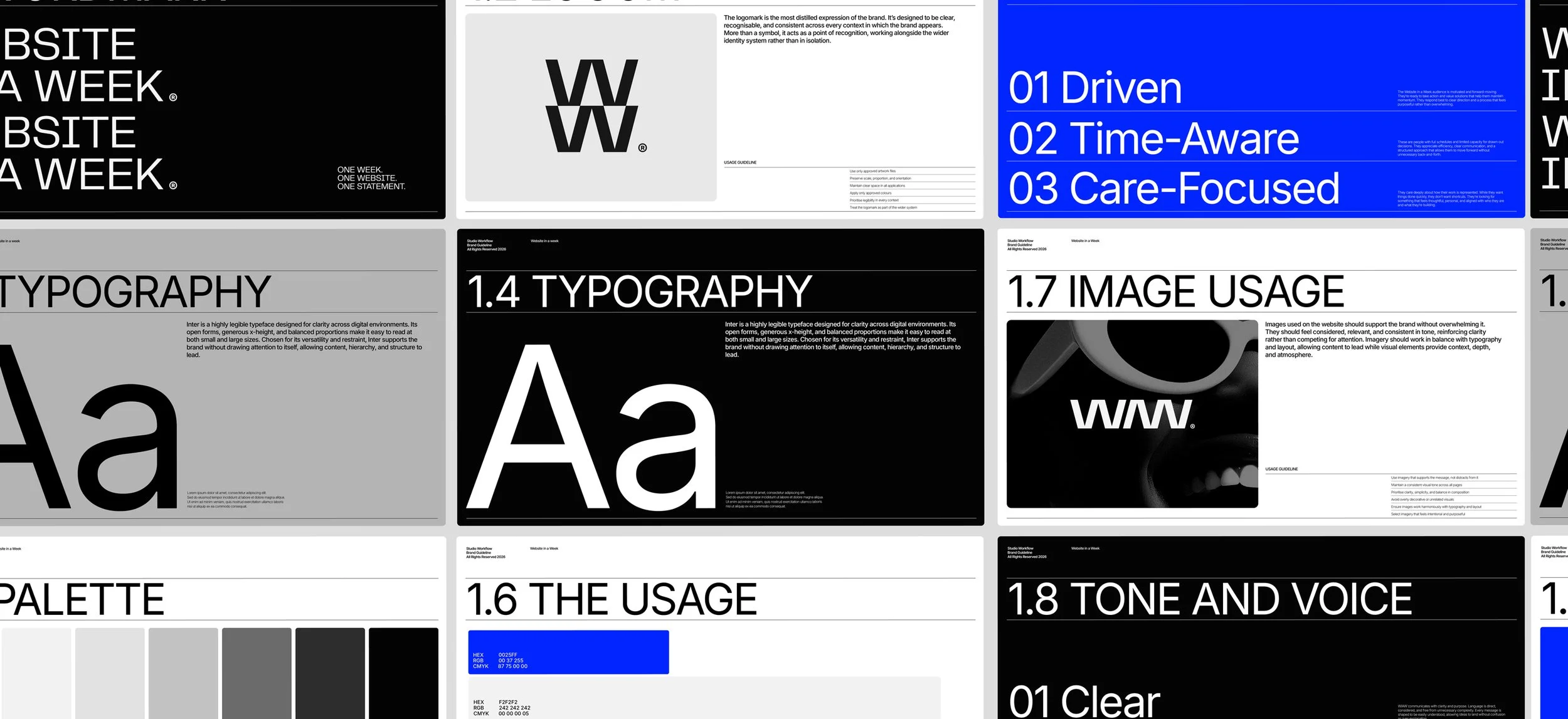
Clarity Is What Allows Brands to Scale
Growth introduces friction. More messages, more materials, more people shaping the brand. Without a shared structure, decisions become subjective, and identity starts to depend on individual judgement. Over time, that variation becomes dilution. What often looks like a design problem is usually a structural one.
A strong brand identity system reduces that friction by creating clarity. It aligns teams, simplifies decision-making, and provides a shared understanding of what belongs and what doesn’t. Instead of restricting creativity, it gives it direction—allowing the brand to evolve without losing itself.
At Workflow, we design brand identity systems as working structures. Systems built to carry meaning, adapt to change, and maintain recognition over time. Because the strongest brands aren’t held together by visuals alone. They’re held together by clarity.
System Structure Clarity Recognition Scale
